Français
  English
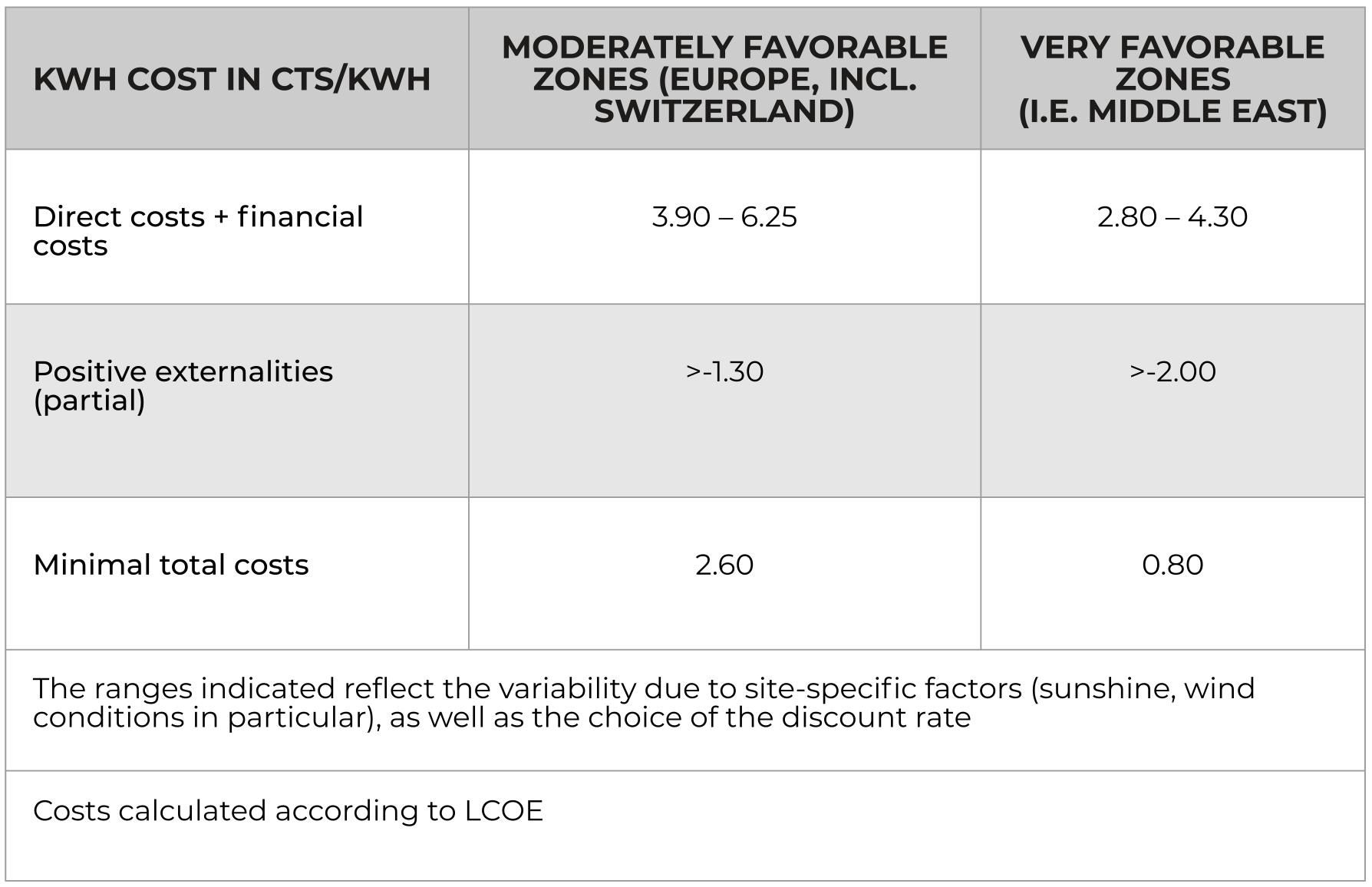
 - The cost of the structure
- The manufacture of photovoltaic panels
- The production of AnemoGenTM generators
- The positive benefits of externalities, such as the protection of road surfaces (savings on road resurfacing, gritting and snow clearance), noise reduction, rainwater harvesting, etc.
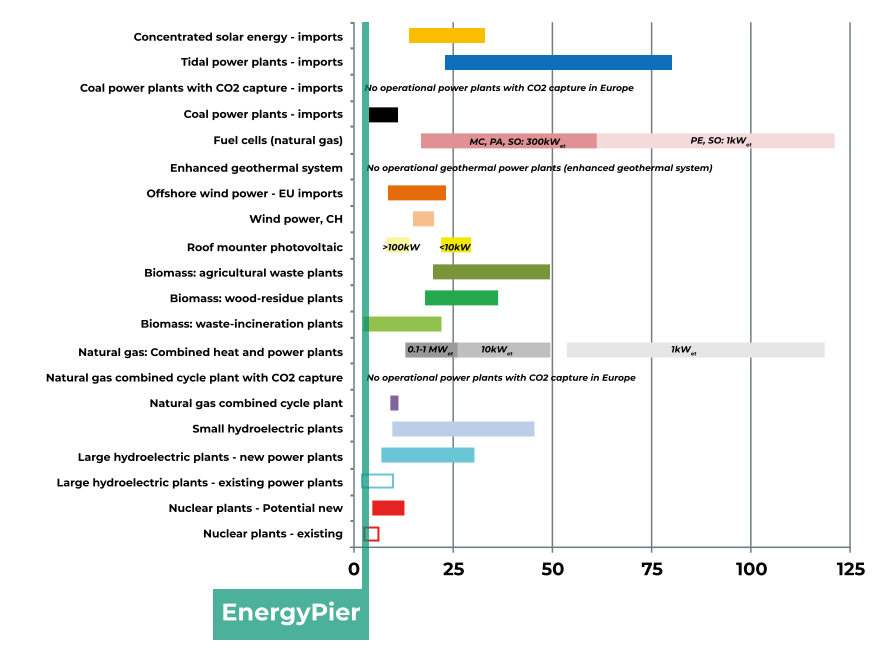
Current electricity generation costs (base year: 2018)
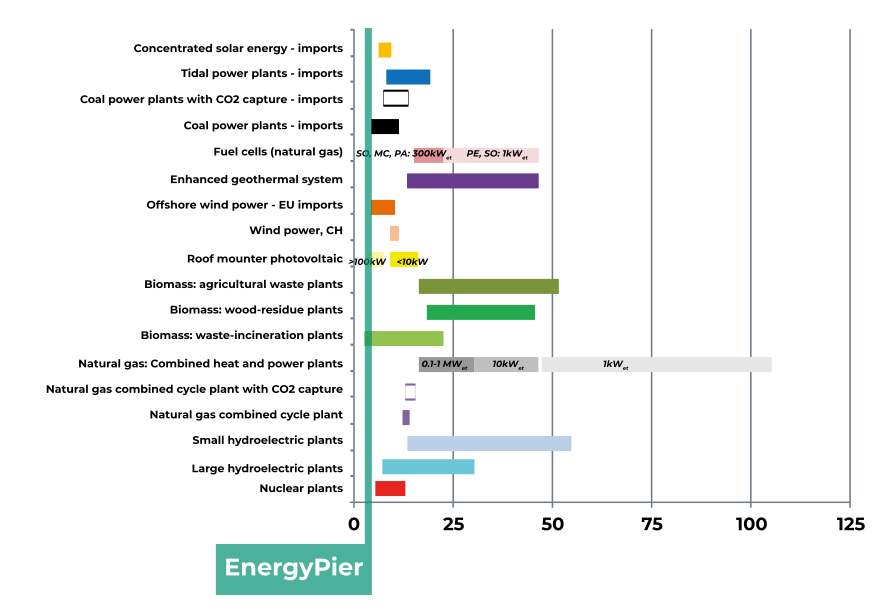
Estimated costs of electricity generation in 2050
Generation costs for new power generation facilities built in Switzerland (in ct./kWh) and offshore wind energy abroad
%20as%20well%20as%20offshore%20wind%20energy%20abroad.svg)
It is clear that the EnergyPier solution achieves highly competitive production costs in both the short and long term, which should enable its rapid integration into the energy landscape as a complement to existing renewable energy sources, particularly hydroelectricity, solar power and wind power.
Its contribution in terms of production volume is expected to complement photovoltaic and wind power, which are set to develop rapidly.
Exploitable potential of renewable electricity generation facilities in Switzerland (in TWh/year)
.svg)
When the LCOE formula is applied to ongoing EnergyPier projects, both in Switzerland and in a subtropical country, the cost estimates fall within the lower cost brackets of the various technologies.
EnergyPier offers highly competitive production costs in both the short and long term, which should enable its rapid integration into existing renewable energy sources, notably hydroelectricity, photovoltaics and wind power.
In terms of production volume, EnergyPier is expected to complement solar and wind power, which are currently undergoing rapid development. EnergyPier power stations will fall into the category of power stations requiring a comparatively low level of investment.
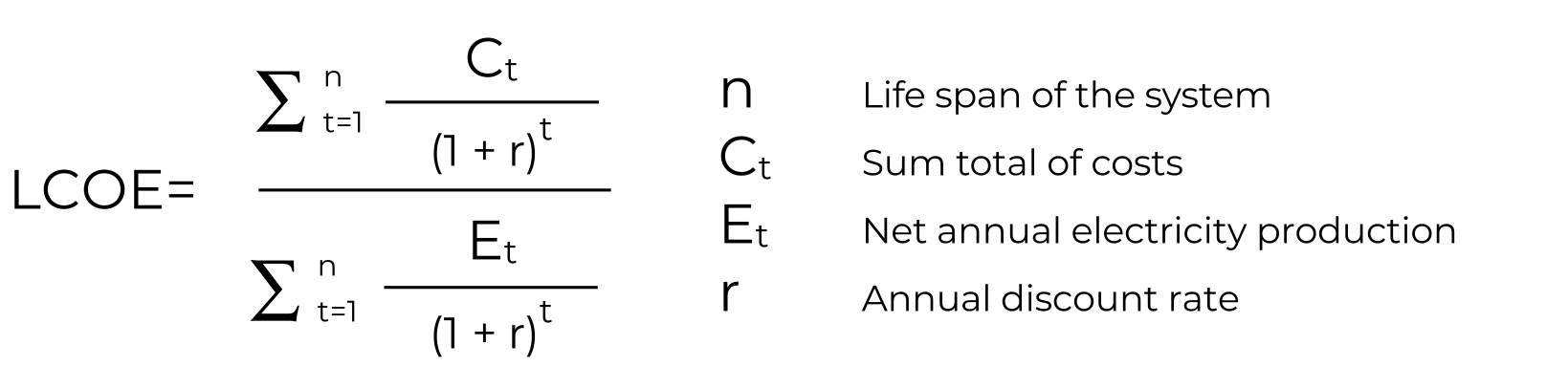
To determine its production costs, the electricity sector frequently uses a model known as LCOE (Levelised Cost of Energy). For a given power generation facility, this corresponds to the sum of the discounted costs of energy production divided by the quantity of energy produced, which is also discounted. It is typically expressed in ct/kWh (or another currency).
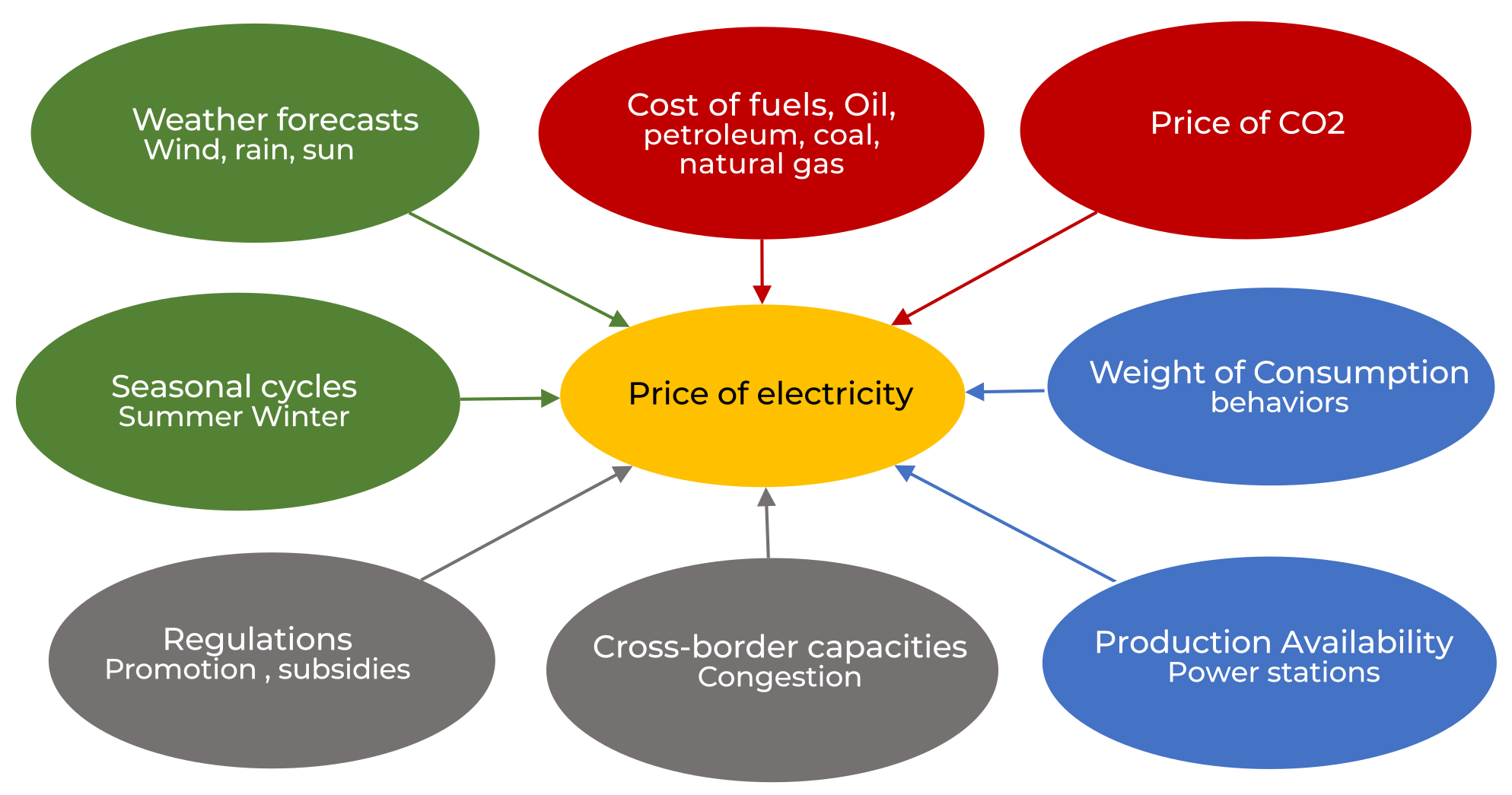
Calculating the cost price of the energy produced involves taking into account a multitude of factors, some of which are fixed and objective (the price of a solar panel), others objective but variable and entirely predictable (the cost of a foundation depending on the local geology), others that are variable and partially predictable (the weather), variable and almost impossible to predict (the state of the economy), some that are entirely arbitrary (the rate of return on invested capital, the financing model), and finally, the most difficult factors: those subject to controversy, such as the cost of nuclear waste storage, the impacts of global warming, etc.